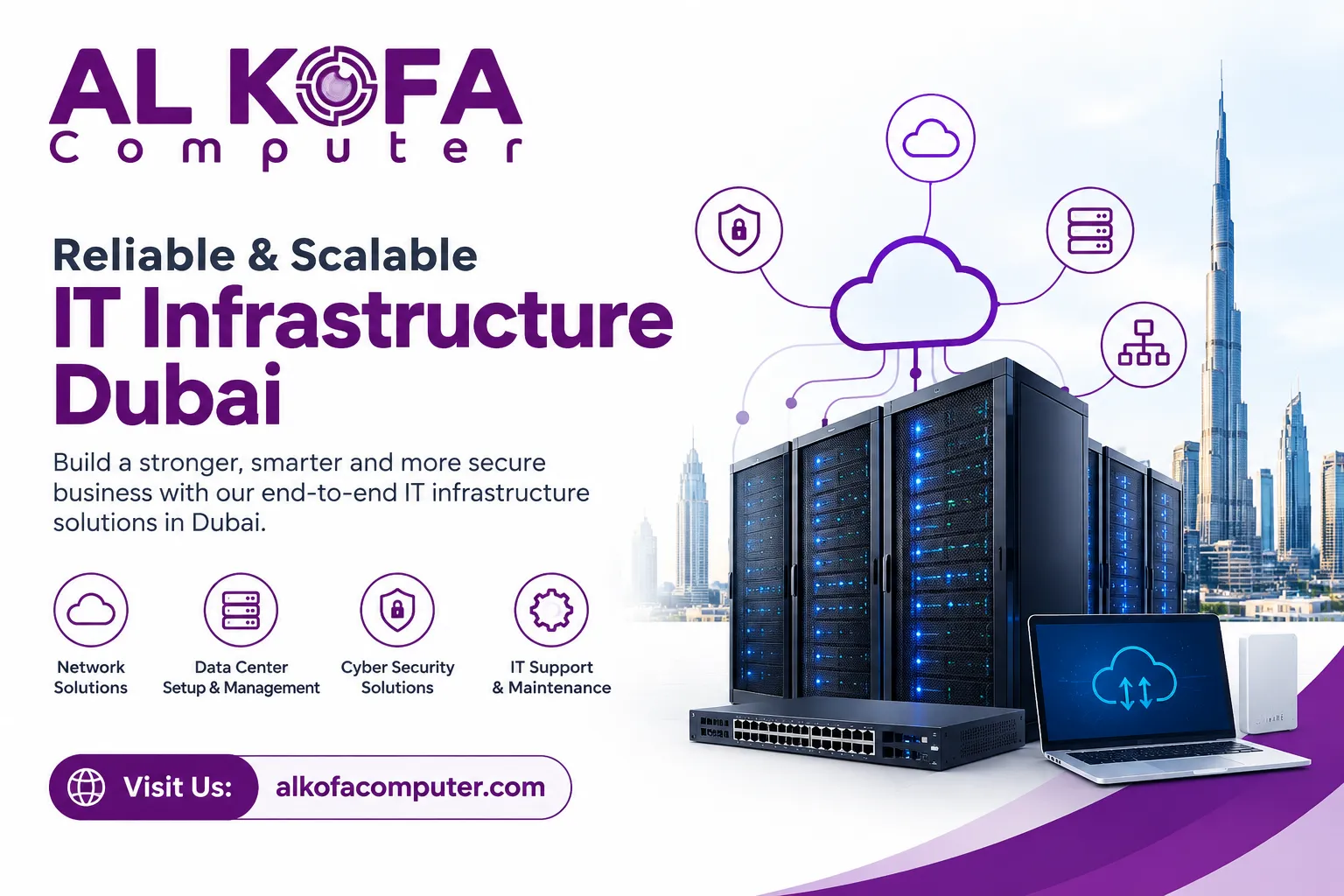
Modern businesses depend on technology for almost every aspect of their operations, from communication and collaboration to data management, customer service, and cybersecurity. As businesses expand, their technology requirements also become more complex. A well-designed IT infrastructure Dubai framework can provide the connectivity, computing resources, security, and support that businesses need to operate efficiently while preparing for future growth.
Building effective infrastructure is not simply about purchasing hardware and installing a network. Businesses need to consider scalability, performance, security, availability, maintenance, and integration when designing their technology environment.
This blog explores the essential components of modern IT infrastructure, the benefits of professional implementation, and the factors businesses should consider when developing a reliable technology foundation.
Why Modern Businesses Need Strong IT Infrastructure
IT infrastructure forms the underlying technology environment that allows employees, applications, devices, and business systems to work together. When this foundation is poorly designed, businesses can experience slow connectivity, system interruptions, security vulnerabilities, and difficulties scaling their operations.
A properly planned infrastructure can create a more stable environment for everyday business activities. It can support employees working across different departments while helping businesses manage growing volumes of data and increasingly sophisticated applications.
Infrastructure planning should therefore begin with understanding the organisation’s current requirements and anticipating how those requirements may change over time. This approach can prevent businesses from investing in systems that quickly become outdated or unable to handle increasing workloads.
Core Components Of A Business IT Environment
A complete IT environment consists of several interconnected technologies. Each component contributes to the overall performance and reliability of business operations.
Network infrastructure provides the connectivity required for employees and devices to communicate, while servers can host applications, files, databases, and other essential resources. Storage systems help businesses manage business information, and virtualisation can allow computing resources to be used more efficiently.
Other important components include wireless connectivity, security appliances, backup systems, endpoint devices, and communication technologies. Bringing these elements together through thoughtful planning can create a more cohesive technology environment.
The objective should not be to install as many technologies as possible. Instead, businesses should select systems that support their operational requirements and work effectively together.
Designing Networks For Performance And Growth
Network performance has a direct impact on employee productivity. Slow connections, unreliable wireless access, and poorly configured network equipment can make routine tasks unnecessarily difficult.
A modern network should be designed around the business’s size, number of users, applications, devices, and expected traffic. Structured cabling can provide a dependable physical foundation, while routing and switching technologies help direct traffic efficiently between different systems.
Wireless networks also require careful planning. Coverage, capacity, security, access-point placement, and user density should all be considered when deploying Wi-Fi across an office or commercial environment.
A scalable network architecture allows businesses to add users, devices, locations, and applications without requiring a complete infrastructure redesign.
Improving Security Across The Technology Environment
Cybersecurity should be incorporated into infrastructure planning rather than treated as an additional feature. Business networks can contain valuable information, making unauthorised access and cyber threats significant operational concerns.
Firewalls can help control network traffic and protect systems from unauthorised connections. Secure remote access, network segmentation, endpoint protection, access controls, and monitoring can further strengthen an organisation’s security posture.
Regular updates are equally important. Hardware and software should be maintained to address vulnerabilities and ensure systems continue operating reliably.
Security also depends on people. Employees should understand basic security practices, including appropriate password management, safe handling of business information, and recognition of suspicious activity.
The Role of Servers and Virtualisation
Servers remain important for organisations that need centralised computing resources, applications, file management, databases, or other business services. Choosing the appropriate server configuration depends on factors such as workload, user numbers, storage requirements, application demands, and future growth.
Virtualisation can provide another layer of flexibility by allowing multiple virtual environments to operate on shared physical resources. This can help organisations use computing capacity more efficiently while simplifying certain aspects of system management.
Businesses should also consider redundancy and recovery when planning server environments. Critical systems may require backup resources or recovery mechanisms to reduce the impact of hardware failures and unexpected disruptions.
Protecting Business Data With Backup Solutions
Data is among the most valuable resources a business possesses. Losing important files, databases, customer information, or operational records can create significant disruption.
A dependable backup strategy should consider what information needs to be protected, how frequently it should be backed up, where copies should be stored, and how quickly data needs to be restored.
Businesses should periodically test their recovery procedures rather than assuming that backups will automatically work when needed. Testing can reveal configuration problems and provide greater confidence that important information can be recovered after an incident.
Backup planning should also form part of a broader business continuity strategy that addresses system failures, security incidents, and other disruptions.
Choosing an IT Infrastructure Solution Provider
Selecting the right technology partner can make infrastructure planning and implementation more manageable. Businesses should look beyond individual products and assess whether a provider can understand their operational requirements and develop an appropriate technology roadmap.
An experienced IT infrastructure solution provider can assist with areas such as network planning, structured cabling, server implementation, virtualisation, system maintenance, and infrastructure optimisation. The provider’s ability to offer ongoing support can also be important because infrastructure requires regular monitoring, updates, troubleshooting, and maintenance.
Businesses should consider technical expertise, response times, service coverage, scalability, security capabilities, and communication when evaluating potential technology partners. A provider that understands the business objective behind an infrastructure project can contribute more effectively than one focused solely on equipment installation.
Supporting Businesses With Professional IT Services
Professional IT support can help businesses maintain their technology environment after implementation. Rather than waiting for problems to interrupt operations, proactive support can identify potential issues and address them before they become significant disruptions.
Remote and on-site assistance can support employees when technical issues occur, while scheduled maintenance can help keep infrastructure functioning properly. Infrastructure management can also include monitoring hardware, networks, software, and other critical components.
Businesses with limited internal IT resources may benefit particularly from external technical support. It allows them to access specialist knowledge without necessarily building a large internal technology team.
Conclusion
A reliable technology foundation is essential for organisations that want to remain productive, secure, and prepared for growth. From networks and servers to cybersecurity, wireless connectivity, virtualisation, backups, and ongoing maintenance, every component should work together as part of a carefully planned environment.
For businesses seeking dependable IT infrastructure Dubai solutions, professional planning and technical support can simplify infrastructure development while helping organisations build systems that accommodate changing requirements.
Al Kofa Computer provides IT infrastructure and networking services in Dubai, including network planning, design, configuration, implementation, and maintenance. Our wider technology services also cover IT support, server-related services, wireless solutions, firewall solutions, backup, cybersecurity, hardware maintenance, and other business technology requirements.
By combining appropriate technology with thoughtful planning and ongoing management, you can create an IT environment that supports present-day operations while providing a foundation for sustainable digital growth. If you are looking for these services, then you can communicate with our team to get the services.