Connecting Business Email, Collaboration, CRM, Sales and Accounting Across Zoho Applications
Running a business with separate tools for email, customer management, sales, and accounting can create unnecessary gaps. Information gets duplicated, teams switch between platforms, and important updates can take longer to reach the right people.
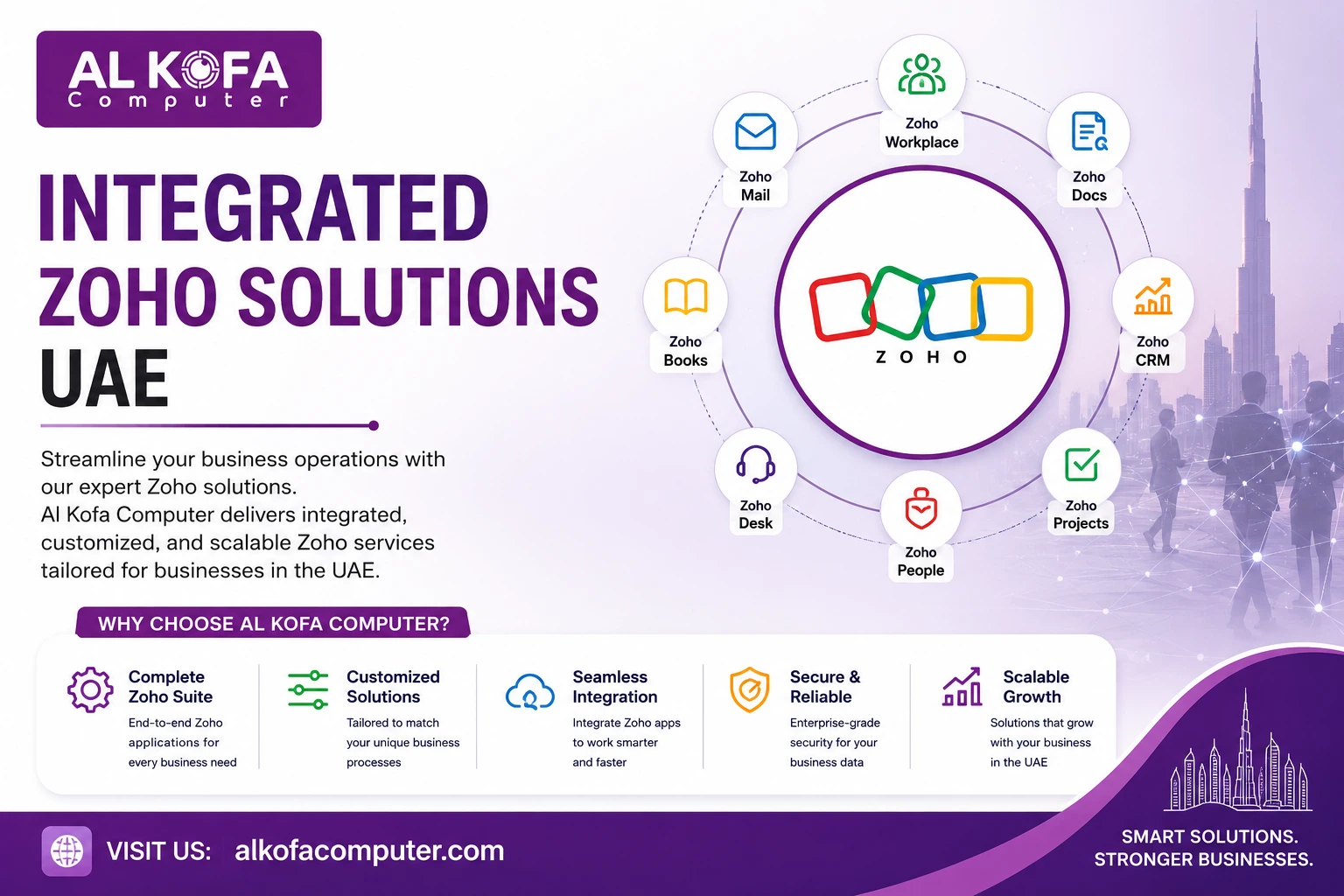
A connected approach changes this. Integrated Zoho solutions UAE can bring communication, collaboration, customer management, sales activity, and finance into a more coordinated working environment.
The goal is not simply to use more applications. It is to make existing business processes work together. When applications share relevant information, employees can spend less time moving data manually and more time acting on it.
This is where the broader Zoho ecosystem for businesses becomes valuable. Different applications can support different departments while remaining part of a connected technology environment.
Why Does Integration Matter Across Business Departments?
Consider a typical sales process. A prospect may first contact a company through email. The sales team then records the enquiry in a CRM, follows up through several conversations, prepares a quotation, and eventually passes billing information to finance.
If each stage operates independently, employees may repeatedly enter the same information. This creates room for errors and slows down the customer journey.
With integrated Zoho solutions UAE, businesses can create clearer connections between these stages. Communication can feed customer records, sales information can support financial processes, and collaboration tools can help teams work around shared information.
Furthermore, integration creates better visibility. Managers can understand what is happening without constantly requesting updates from different departments.
How Can Email Become the Starting Point?
Business communication often begins with email. Therefore, connecting professional email with customer management can provide a more organised way to handle enquiries and follow-ups.
Zoho Mail and CRM integration can help businesses connect communication with customer-facing processes. Instead of treating an email conversation as an isolated interaction, relevant customer information can become part of the wider relationship-management process.
For example, a sales representative receiving an enquiry can move from communication to customer follow-up without maintaining completely separate records.
This is particularly useful when several employees interact with the same customer. Better visibility can reduce missed conversations and help teams maintain continuity.
Where Does Workplace Fit?
Email alone is not enough for modern teams. Employees also need documents, shared files, communication channels, and collaboration tools.
Zoho Workplace and CRM integration can connect collaboration activities with customer-focused workflows. Teams can work on relevant documents while keeping customer and sales information within the broader business environment.
Consequently, employees do not need to rely on disconnected storage locations or scattered communication threads for every task.
How Should Businesses Manage Different Sales Requirements?
CRM requirements vary by business size and maturity. Smaller teams may need basic lead tracking, while growing organisations benefit from advanced automation, reporting, and customer engagement capabilities.
Starting With a Simpler Sales Process
Smaller teams can use Bigin to manage contacts, leads, deals, and sales stages simply. A Zoho Bigin and Zoho CRM workflow can evolve as sales needs grow, supporting smoother scalability.
Connecting Sales With Customer Management
A mature CRM improves visibility into customer interactions, deals, follow-ups, and sales performance, enabling teams to coordinate better, manage opportunities efficiently, and maintain consistent customer information across departments.
How Can Accounting Become Part of the Same Workflow?
Sales activity does not end when a deal closes. Financial processes follow, including invoicing, expense management, payment tracking, and reporting.
This is where Zoho CRM and Zoho Books integration becomes particularly useful. Relevant customer and transaction information can move between sales and accounting processes, reducing the need for repeated manual entry.
Imagine a service company closing a new customer agreement. Instead of finance rebuilding the customer record from scratch, connected processes can make the transition more structured.
However, integration should always reflect actual business requirements. Not every field needs to be shared, and not every process needs automation.
What Does a Connected Business Process Look Like?
A practical workflow starts with an enquiry through business email. Sales records the opportunity, teams collaborate on proposals, and CRM tracks progress before accounting handles the financial process.
With integrated Zoho solutions UAE, each application has a defined role while remaining connected. This creates smoother handovers and helps businesses design workflows around their actual operations instead of simply adding multiple subscriptions.
Repetitive tasks such as lead assignment, reminders, updates, notifications, and financial handovers can consume time. Zoho business process automation UAE can reduce manual intervention, but businesses should first streamline processes before automating them.
What Should Businesses Consider Before Implementation?
Integration works best when businesses plan around actual processes, not software features. Identify information sources, repeated data entry, responsible teams, access requirements, and workflow ownership before implementation.
Security is equally important. Set appropriate permissions, authentication, and data controls based on employee responsibilities. Furthermore, review existing email, customer, and financial data before migration to avoid carrying poor-quality information forward.
Finally, employee training should explain both how the system works and why workflows are structured that way. This encourages consistent adoption, reduces confusion, and helps teams gain greater value from the integrated environment.
How Can UAE Businesses Build Integration Without Disrupting Operations?
A phased implementation is often more practical than changing everything simultaneously.
Start with the most important business process. For many companies, this could be email and CRM communication. Once employees are comfortable, collaboration, sales, and accounting connections can be introduced.
Integrated Zoho solutions UAE can then develop alongside the organisation instead of forcing every department through a major technology change at once.
Working with a Zoho partner Dubai can also provide implementation guidance, configuration support, migration assistance, employee training, and ongoing advisory.
Furthermore, businesses should review the system after implementation. Usage patterns can reveal where employees still rely on manual workarounds or where workflows need refinement.
What Benefits Can Businesses Expect From a Connected Environment?
A well-planned ecosystem can deliver practical improvements across everyday operations.
- Less duplicate data entry: Teams can reduce repeated manual updates across connected processes.
- Better customer visibility: Relevant interactions and sales information can be easier to access.
- Faster internal coordination: Employees can work from shared information instead of waiting for separate updates.
- Improved financial handover: Sales information can flow more smoothly into accounting activities.
- Greater process consistency: Defined workflows can reduce variations in how employees handle routine tasks.
- Easier scalability: New users, teams, and processes can be added as business requirements change.
These benefits depend on proper configuration. Technology alone does not create an efficient business. The applications must reflect the organisation’s actual working methods.
Build a Connected Workplace With the Right Implementation Approach
For UAE businesses, the strongest technology setup is not necessarily the one with the largest number of applications. It is the one that connects essential processes without creating unnecessary complexity.
A thoughtfully designed integrated Zoho solutions UAE environment can bring communication, collaboration, sales, customer management, and accounting closer together. The result is a more structured digital workplace where information can move between teams with fewer manual barriers.
Make Your Zoho Environment Work Smarter
AL KOFA Computer helps businesses approach Zoho implementation as a business process exercise rather than a simple software installation. We can help you assess requirements, plan migration, configure applications, support user onboarding, and align the wider Zoho environment with operational needs.
With integrated Zoho solutions UAE, you can create a more connected foundation for communication, customer management, sales, and finance while keeping implementation practical and scalable. Our approach focuses on reducing disruption and helping your teams use the technology effectively.
If you are planning to connect your Zoho applications, talk to our team today about your requirements.
Building an integrated Zoho solutions UAE environment starts with understanding how information moves through your business. Email, collaboration, CRM, sales, and accounting can work together rather than operating as isolated functions.
The right integration strategy can reduce repetitive work, improve visibility, and create smoother departmental handovers. However, successful implementation requires thoughtful planning, secure configuration, clean data, employee training, and continuous improvement.
In conclusion, businesses should first connect the processes that matter most. As requirements evolve, the ecosystem can expand accordingly, creating a practical digital foundation for sustainable growth.